
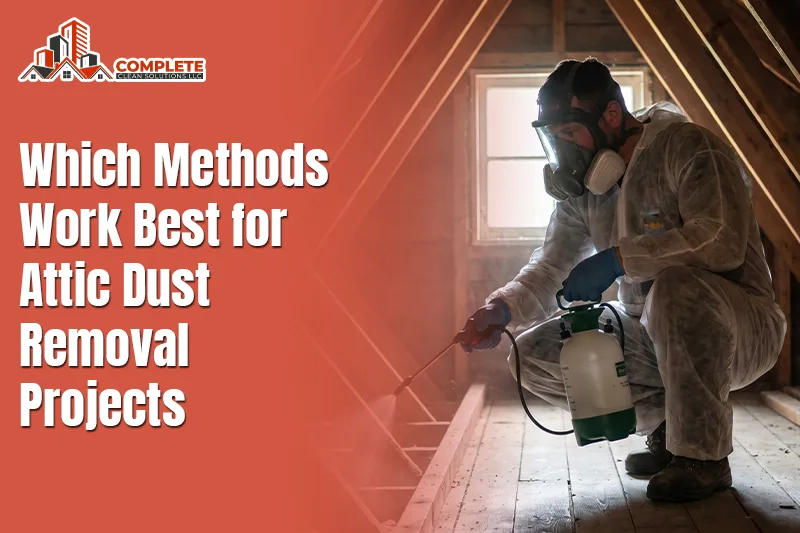
An attic can look fine from the living area while years of fine dust, insulation particles, dirt, cobwebs, and debris sit unseen above the ceiling. Once you climb up, the difference is obvious. Attic dust removal is rarely as simple as sweeping the visible floor, because sweeping tends to lift fine particles into the air and settle them somewhere else.
The best cleaning method depends on the type and amount of dust, the attic’s surfaces, the condition of the insulation, how easy the space is to reach, and whether moisture, pests, or other contamination are present. This guide compares the main methods so you can decide what suits your attic and whether to handle it yourself or bring in professional help.
Why Attic Dust Builds Up Faster Than You Expect

Attics collect dust faster than most people expect because of how air moves through a home. Warm air rises, and it carries fine household particles up through small gaps around light fixtures, pipes, wiring, and the attic hatch. Over time, those particles settle on rafters, joists, flooring, and stored belongings, and there is usually no routine cleaning to remove them.
Insulation adds to the problem. Loose or aging insulation can shed fibers and fine particles, and any disturbance, such as foot traffic or moving boxes, sends them into the air. Outdoor dust and pollen can also enter through roof vents and small openings, especially in older homes or attics with limited sealing.
Stored items contribute too. Cardboard boxes, old fabric, and packed belongings shed fibers, and crowded storage traps dust in places that are hard to reach. A dusty attic is often a sign that airflow, sealing, storage habits, and upkeep have all played a part. Understanding where the dust comes from makes any attic dust cleanup more effective and supports better home attic cleaning and attic maintenance in the long run.
Which Dust Removal Method Fits Your Attic Best
Different attic conditions call for different cleaning approaches rather than one universal method.
A lightly dusty storage space needs a very different treatment from one containing years of settled particles and debris.
This section sets up the decision-making framework for choosing an effective method, whether that is simple attic deep cleaning or help from attic cleaning services.
Match the Method to the Type of Dust
Fine household dust, insulation particles, dirt, cobwebs, and mixed debris do not all respond to the same technique. Light dust on solid surfaces may only need careful vacuuming, while a mix of dirt and insulation fibers calls for gentler handling so particles are not scattered. Matching the method to what you are actually dealing with prevents wasted effort and avoids making the problem worse.
Consider How Accessible the Attic Surfaces Are
Low ceilings, tight corners, exposed framing, partial flooring, and crowded storage areas all affect what is practical. A method that works well in a walk-in attic with a solid floor may be unsafe or ineffective in a crawl space. If reaching the surfaces means stepping on bare joists or working in cramped, hot conditions, professional attic cleaning may be the more sensible choice.
How Vacuuming Handles Fine Attic Dust Effectively
Controlled vacuuming is generally the most effective way to remove fine attic dust, because it captures particles instead of moving them around. Sweeping and dry brushing tend to put dust into the air, where it settles again, while a vacuum with suitable filtration pulls it in and holds it.
Equipment matters. Fine dust can pass straight through the filters of a standard household vacuum and come out the exhaust, so a vacuum with a HEPA filter is a better choice for attic dust cleanup. Use a soft brush attachment for wood and framing, a crevice tool for corners and edges, and a longer hose or wand to reach high or tight spots. Work slowly, since quick movements stir up particles.
Vacuuming suits solid floors, exposed framing, shelves, ledges, corners, and the tops of stored containers. It is less suitable for loose insulation, where suction can pull material out of place. Many dust removal services rely on powerful, filtered vacuum systems for the same reason, and professional dust removal crews often use them for large or heavily soiled attics.
When Brushing and Wiping Make More Sense
Vacuuming removes loose dust, but settled dust on solid surfaces sometimes needs more. A light pass with a soft brush can loosen dust from rough wood, and a slightly damp microfiber cloth can pick up what remains. The goal is to collect dust, not spread it, so always vacuum first and wipe afterward.
Wiping works best on surfaces that can tolerate a little moisture, such as plywood flooring, shelving, plastic or metal storage bins, and finished ledges. Use a cloth that is barely damp, never wet, and change it often so you are not pushing dust from one area to another. Avoid wiping near exposed wiring, junction boxes, or insulation.

This combination of vacuuming followed by careful wiping is the backbone of most attic cleaning and attic cleanup jobs. For heavy buildup, it is also the first stage of an attic deep clean, where several passes may be needed before the space looks and feels clean.
What Changes When Dust Is Mixed With Debris
Dust is sometimes only part of the picture. Old boxes, insulation fragments, nesting material, construction debris, cobwebs, and other accumulated waste can be mixed in, and in that case removing the dust is really part of a broader cleanup. Trying to vacuum around piles of debris is slow, and it stirs up more dust each time something is moved.
It is usually better to remove larger materials first. Clearing out broken items, bagging loose debris, and taking unwanted belongings out of the attic leaves surfaces open for proper cleaning. If the space is crowded with stored items, attic clutter removal can be a good first step, since it makes the dust-cleaning stage much easier. You can find more on this in this guide to attic clutter removal and organization.
Plan for disposal as well. Attic debris removal and attic waste removal involve carrying bags and items down through narrow openings, so it helps to sort and bag materials as you go, keeping bags sealed to limit dust. Once the clutter is gone, attic clutter cleanup and attic debris cleanup turn into a simple dust-removal job.
How to Clean Dust From Different Attic Surfaces
The same technique should not automatically be used on every material in an attic.
Wood framing, flooring, shelving, and insulation each react differently to cleaning.
Choosing the right approach reduces dust without causing damage or unnecessary disturbance.
Handle Exposed Wood and Framing Carefully
Rafters, joists, beams, and other exposed wood collect settled dust, and they should be cleaned without excessive moisture. Vacuum with a soft brush attachment first, then wipe lightly with a barely damp cloth if needed. Avoid soaking unfinished wood, since moisture can encourage mold or staining.
Clean Solid Floors Without Spreading Particles
On plywood, boards, or finished attic flooring, use controlled vacuuming and collect loose dust in slow, overlapping passes. Avoid dry sweeping, which sends particles airborne. This approach works well for attic dirt removal, where dirt and dust have mixed on the floor.
Treat Shelving and Storage Surfaces Separately
Shelves, cabinets, containers, and storage areas can hold concentrated dust that needs targeted cleaning. Empty them if practical, vacuum the surfaces, and wipe down storage bins before putting items back. Dust tends to hide in the tops and sides of containers that have not been moved in years.
Work Around Insulation Without Disturbing It
Loose or damaged insulation should not simply be swept or aggressively disturbed during routine dust removal. Vacuuming directly over it can pull material out, and walking on it can compress it and release fibers. Clean the surrounding surfaces first, and leave the insulation alone unless it shows signs of damage.
Reach Corners, Edges, and Hidden Dust Traps
Dust builds up around roof framing, vents, pipes, stored containers, and other overlooked areas. A crevice tool, a long wand, and a flashlight help you find and reach these places. Checking them carefully is part of a thorough home attic cleaning and an effective attic deep clean.
Why Insulation Changes the Attic Cleaning Approach
Insulation should not be treated like ordinary dirt. It is part of how the attic performs, and disturbing it can release fibers and reduce its effectiveness. Before deciding how to clean, look closely at what condition it is in.
Several things influence the next step. Age matters, since older insulation may be compressed, degraded, or dirty throughout. Moisture is another factor, because damp insulation can lose its insulating value and support mold. Pest contamination, such as droppings or nesting, and visible deterioration can also mean that cleaning is no longer enough. In these cases, removing old insulation may be the better option, and it can help with indoor air quality when the material is heavily soiled or damaged.
A simple way to decide is to ask a few questions. Is the insulation dry and in place? Is it free of droppings, stains, or mold? Is it evenly distributed and not flattened? If the answers are yes, leave it alone and clean around it. If not, it is worth having it assessed. Some older attics may contain materials that should not be disturbed without testing, so when in doubt, get advice. This is where attic deep cleaning, professional attic cleaning, and attic maintenance services can overlap, since a proper assessment comes before any major work.
When Attic Dust Signals a Bigger Problem
Ordinary dust settles slowly and evenly, and it cleans up without much trouble. Dust that returns quickly, looks unusual, or comes with other symptoms may point to an underlying problem that cleaning alone will not fix. In that case, it is better to inspect first and clean second.
Pests are one of the most common causes. Droppings, nesting material, and chewed insulation suggest animals have been in the space, and some pests leave contamination that is unsafe to disturb. If you suspect wildlife, including evidence of bats, it helps to read up on how to keep the attic bat-free while cleaning before you begin. Moisture is another cause, since leaks and poor ventilation can cause staining, odors, and mold growth.
Signs that deserve attention before extensive cleaning include:
- Water stains or damp spots on rafters, the roof deck, or insulation
- A musty or sour odor
- Droppings, nests, or chewed materials
- Flattened, stained, or clumped insulation
- Unusual buildup of dark or greasy residue
- Dust that returns quickly after cleaning
Dealing with the source first makes residential attic cleanup more effective and keeps attic maintenance manageable. If the signs point to a larger attic debris removal project or contamination, professional attic cleaning is worth considering.
How Professional Equipment Improves Dust Control

Professional equipment can make a real difference when fine dust has built up over a large or hard-to-reach attic. The benefit is not simply speed. It is better control of particles, better reach, and better protection for the people doing the work.
Crews commonly use industrial vacuum systems with high-efficiency filtration, which capture fine particles that household vacuums can release back into the air. Specialized attachments help them reach corners, framing, and tight spaces, and containment practices, such as sealing the attic entrance and using negative air or sealed hoses, help keep dust from spreading into the rest of the home. Protective gear, such as respirators, coveralls, and eye protection, adds safety for heavy dust and debris.
Access is another factor. Experienced crews know how to work safely on joists, in low areas, and in heat, and they can carry equipment and debris through narrow openings. For extensive dust, professional dust removal may be more thorough than DIY, and dust removal services that include an attic deep clean can cover surfaces that are difficult for homeowners to reach. That said, “professional” does not automatically mean faster, so the value depends on the size and condition of the attic.
How to Keep Removed Dust From Reaching Living Areas
A clean attic is not much of a win if the dust ends up in the rest of the house. Controlling where particles go during the work is as important as the cleaning itself. Helpful practices include:
- Closing or sealing the attic hatch or door between work sessions, and covering nearby doorways
- Turning off the HVAC system while you work so dust is not drawn into the ducts.
- Wearing a NIOSH-approved respirator, eye protection, gloves, and disposable coveralls
- Using a HEPA vacuum instead of sweeping or blowing dust
- Bagging dust and debris in sturdy bags, sealing them, and carrying them out in a way that does not shake them
- Wiping down the area around the attic entrance and changing clothes before going back into living spaces
Good containment keeps attic dust cleanup from turning into a household dust problem. It also helps with attic waste cleanup, since sealed bags are easier to move, and it supports safer home attic cleaning overall. Plan the route ahead of time so you are not carrying open bags through occupied rooms.
Which Attic Cleaning Tasks Are Worth Hiring Out
Not every attic needs professional help. A lightly dusty storage attic with easy access may be a reasonable DIY project, while a large, cramped, or contaminated space is a different matter. The deciding factors are the amount of dust, how hard the space is to reach, whether there is mixed debris, and whether insulation, pests, or mold are involved.
If the job looks too large or risky, attic cleaning services can take on the heavy work, and professional attic cleaning is often the better option for extensive buildup. You can look at attic cleaning services to see how a provider approaches the job. Residential attic cleanup that includes debris removal, dust control, and assessment is also something attic maintenance services can plan on a regular basis.
| Factor | DIY Dust Removal | Professional Cleaning |
| Light surface dust | Often manageable | Also suitable |
| Large dust buildup | More time and effort | Specialized equipment can help |
| Tight or difficult access | May be challenging | Experienced crews can assess access |
| Mixed debris | Requires separate handling | Can be incorporated into broader cleanup |
| Pest or mold contamination | Requires caution | Professional assessment may be appropriate |
| Insulation concerns | Easy to disturb accidentally | Can be evaluated as part of the job |
| Ongoing maintenance | Homeowner-managed | Can be planned professionally |
How Much Time and Effort Does Dust Removal Take
There is no single answer, because attics vary so much. A small, lightly dusty attic may take a few hours, while a large one with deep buildup can take much longer, so it is better to think in terms of factors than a fixed schedule.
Several things drive the effort: the size of the attic, how deep and widespread the dust is, how many belongings are stored there, how difficult the access is, how much debris is present, the condition of the insulation, and the method you choose. Attic dust removal with a HEPA vacuum and careful wiping takes longer than a quick sweep, but it gives a much better result. A project that also includes attic deep cleaning and debris removal may be better suited to a team.
It is also worth planning for heat, breaks, and a safe pace, since attics can be uncomfortable or unsafe in hot weather. If you want a broader attic cleaning guide before you decide how much to take on, read through the steps and compare them with your attic’s condition. When the project looks bigger than expected, attic cleaning services can help estimate the work.
What Attic Dust Removal Can Cost in Real Projects
Costs for attic dust removal depend on the scope of the work, not just the size of the attic. A quote should reflect what is actually involved, and comparing them by price alone can be misleading.
The main influences are the size of the attic, how easy it is to access, the level of contamination, the volume of debris, the condition of the insulation, the equipment needed, the labor involved, and any additional services such as hauling or sanitizing. When old boxes or waste need to be taken away, junk removal pricing often comes into the estimate, since volume and weight affect hauling.
Factors that commonly affect estimates include:
- Attic size and layout
- Access difficulty, such as hatches, ladders, and low clearance
- The level of dust, dirt, or contamination
- The amount of debris or clutter to remove
- Insulation condition and whether any needs attention
- Equipment and protective gear required.
- Labor time and number of workers
- Extra services such as hauling, sanitizing, or inspection
Ask for a written estimate that explains what is and is not included. Reliable attic cleaning services and dust removal services should be able to describe their process and explain how professional dust removal or residential attic cleanup is priced for your property.
Which Habits Help Prevent Heavy Attic Dust Buildup
Cleaning once helps, but habits keep the dust from coming back in the same amount. The aim is to reduce what enters the attic and make regular upkeep easy. Useful habits include:
- Storing items in sealed plastic bins instead of open cardboard boxes
- Keeping the attic organized and clutter under control
- Checking the attic hatch and sealing gaps around pipes, wiring, and fixtures
- Inspecting vents, insulation, and the roof for damage or leaks
- Doing a quick visual check once or twice a year
- Repairing problems, such as leaks or pest entry points, as soon as they appear
Many of these tasks fall under routine attic maintenance and are easier than a large cleanup. Regular attic clutter removal prevents dust from collecting in crowded corners, and small fixes limit how much needs attic cleanup later. Attic maintenance services can also be scheduled if you prefer not to handle the upkeep yourself.
Final Thoughts on Choosing an Attic Dust Method
The best method for attic dust removal depends on the actual condition of the attic, not on one universal technique. Matching the approach to the type of dust, the surfaces, the insulation, the amount of debris, and the level of access gives better results and avoids unnecessary disturbance. Careful vacuuming, gentle wiping, and good containment cover most lighter jobs, while RRC Cleanout can help when professional attic cleaning is needed.
Some situations call for more. Heavy buildup, difficult access, damaged insulation, pest or moisture problems, and large amounts of debris are signs that an attic deep clean or professional attic cleaning may be the safer and more thorough option. Ongoing attic maintenance then helps keep the space from returning to that state.
If dust levels, access, debris, insulation, or contamination make the project difficult, consider arranging professional help. A qualified provider can assess the space, explain what is needed, and handle the work safely.
FAQs About Attic Dust Removal Methods
Attic dust varies by home, storage habits, ventilation, insulation, and the condition of the space.
These questions clarify practical concerns you may still have after reviewing the cleaning methods.
The answers are general guidance, and your own attic may need a different approach.
There is no fixed schedule. Many homeowners check the attic once or twice a year and do a thorough cleanup every few years, or sooner if dust builds up, leaks occur, or work is done in the space.
It can handle light dust, but fine particles may pass through standard filters and return to the air. A HEPA-filtered vacuum is a better choice for heavy or fine dust.
If it is dry, in place, and only dusty, leave it alone and clean around it. If it is damp, contaminated, flattened, or deteriorated, have it assessed for possible replacement.
Light dusting can often be done safely with proper protection, such as a respirator, gloves, and eye protection. Heavy contamination, pests, mold, or unknown materials are better handled with professional guidance
Look for droppings, nesting material, musty odors, stains, or unusual residue. If you notice these, avoid disturbing the area and have it inspected before cleaning.